
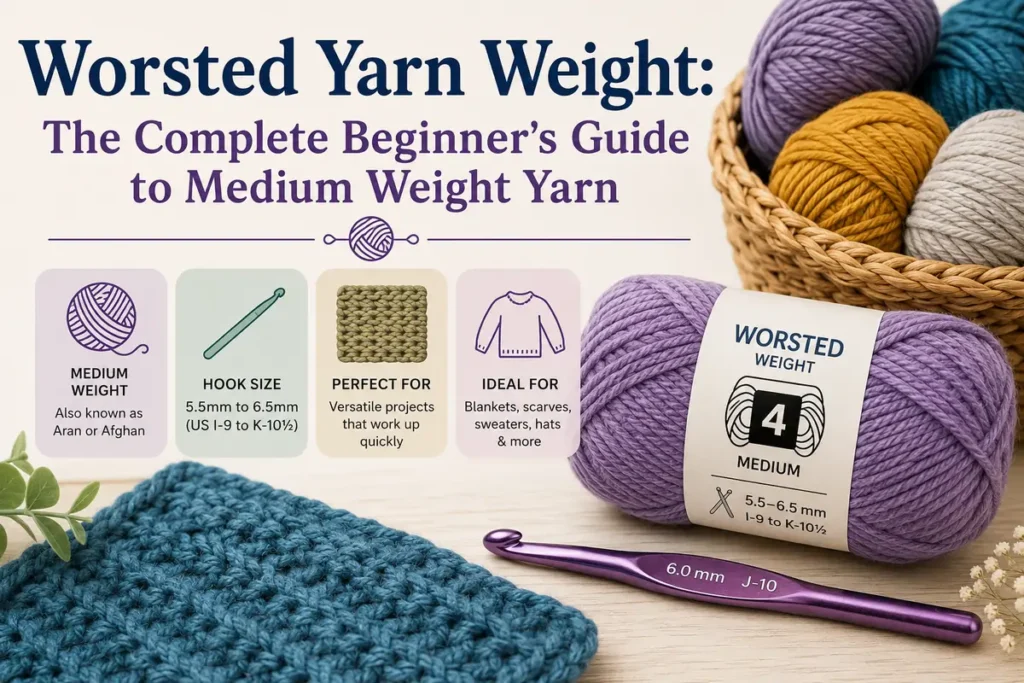
Yarn weight comparison chart showing where worsted weight (size 4) fits in the standard system
What Is Worsted Yarn Weight, Really?
If you have ever walked into a craft store and felt overwhelmed by all the yarn choices, you are not alone. The first thing you need to understand is yarn weight — and not the kind you measure on a scale. Yarn weight actually means how thick the strand of yarn is.
Worsted yarn weight sits right in the middle of the yarn family. It is a medium weight yarn, officially called “size 4” by the Craft Yarn Council. Think of it as the Goldilocks of yarn — not too thin, not too thick, but just right for most projects.
I have been crocheting for over ten years, and I always tell new crafters the same thing: start with worsted weight yarn. It is forgiving, easy to hold, and you can actually see your stitches as you work. That matters more than you think when you are learning.
How to Spot Worsted Weight Yarn at the Store
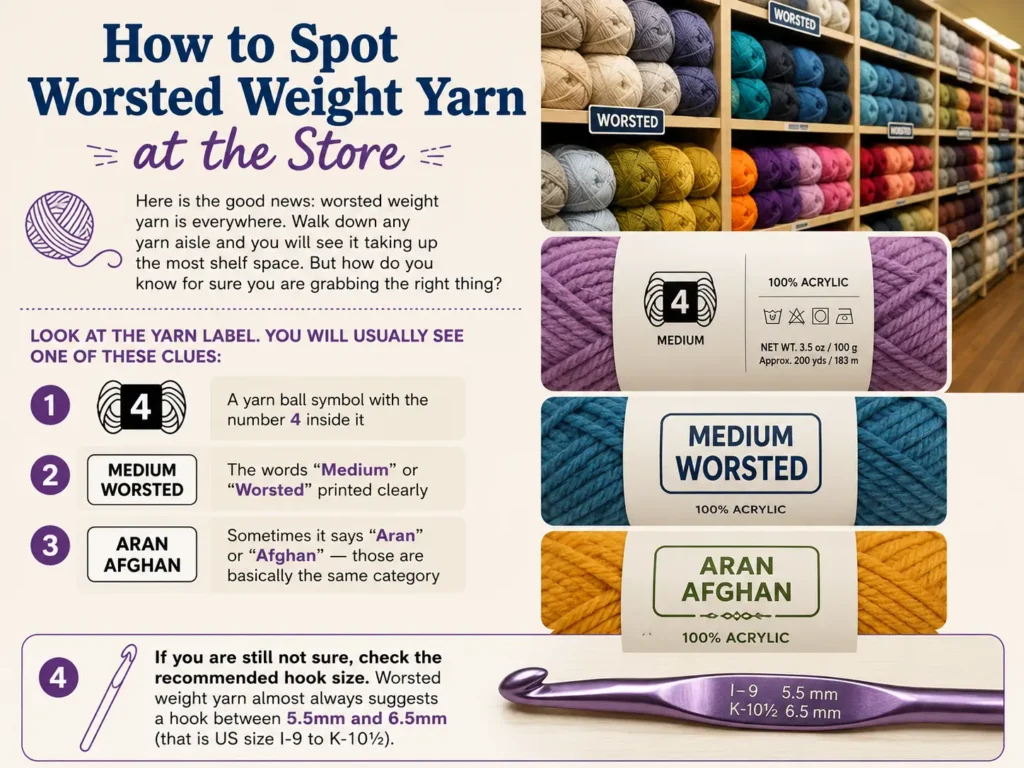
Here is the good news: worsted weight yarn is everywhere. Walk down any yarn aisle and you will see it taking up the most shelf space. But how do you know for sure you are grabbing the right thing?
Look at the yarn label. You will usually see one of these clues:
- A yarn ball symbol with the number 4 inside it
- The words “Medium” or “Worsted” printed clearly
- Sometimes it says “Aran” or “Afghan” — those are basically the same category
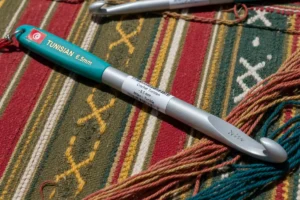
If you are still not sure, check the recommended hook size. Worsted weight yarn almost always suggests a hook between 5.5mm and 6.5mm (that is US size I-9 to K-10½).
Worsted Weight vs. Other Yarns: A Simple Breakdown
Let me put this in plain English. Yarn comes in eight standard weights, numbered 0 to 7. Worsted sits at number 4.
| Yarn Weight | Category | Common Names | Best For |
|---|---|---|---|
| 0 | Lace | Thread, Cobweb | Doilies, fine shawls |
| 1 | Super Fine | Fingering, Sock | Socks, lightweight tops |
| 2 | Fine | Sport, Baby | Baby clothes, light sweaters |
| 3 | Light | DK, Light Worsted | Garments, blankets |
| 4 | Medium | Worsted, Aran, Afghan | Everything — seriously |
| 5 | Bulky | Chunky, Craft | Quick blankets, winter hats |
| 6 | Super Bulky | Roving, Super Chunky | Arm knitting, cozy scarves |
| 7 | Jumbo | Roving | Extreme chunky blankets |
See why worsted weight yarn is so popular? It bridges the gap between delicate projects and heavy-duty ones. You can make a summer cardigan or a winter hat with the same weight — just switch up the fiber.
The Right Hook Size for Worsted Yarn
This is where a lot of beginners get confused. The pattern tells you one hook size, but the yarn label says another. Who do you listen to?
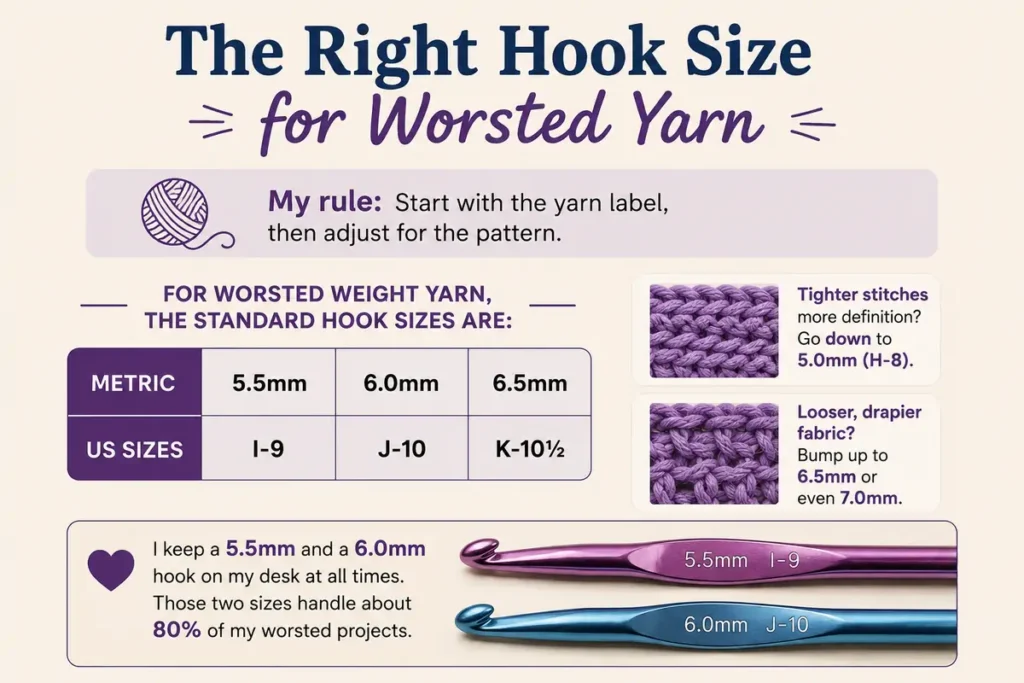
My rule: Start with the yarn label, then adjust for the pattern.
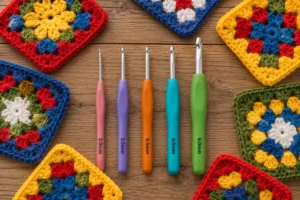
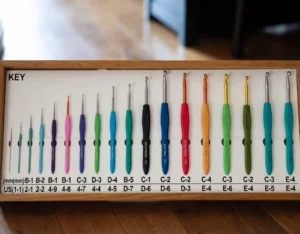
For worsted weight yarn, the standard hook sizes are:
- Metric: 5.5mm, 6.0mm, or 6.5mm
- US Sizes: I-9, J-10, or K-10½
Want tighter stitches with more definition? Go down to a 5.0mm (H-8). Want a looser, drapier fabric? Bump up to a 6.5mm or even 7.0mm.
I personally keep a 5.5mm and a 6.0mm hook on my desk at all times. Those two sizes handle about 80% of my worsted weight projects.
What Can You Make with Worsted Weight Yarn?
The better question is: what can’t you make? This is why I call worsted weight yarn the workhorse of the crafting world.
My favorite projects for worsted yarn:
- Scarves and cowls — works up fast but not too bulky
- Baby blankets — soft, warm, and machine-washable if you pick the right fiber
- Amigurumi toys — tight enough to hold stuffing, thick enough to work quickly
- Sweaters and cardigans — structured but comfortable
- Hats and mittens — warm without feeling like armor
- Dishcloths and coasters — especially in cotton worsted
- Home decor — baskets, pillow covers, plant hangers
Last winter, I made a chunky cabled scarf for my sister using worsted weight merino. It took me four evenings. With fingering weight, that same scarf would have taken me four weeks. That is the magic of medium weight yarn.
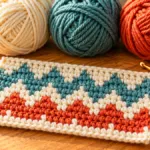
More: Mosaic Crochet Patterns: Easy Guide for Beginners
Fiber Matters: Not All Worsted Yarn Is the Same
Here is something a lot of people miss: worsted describes the thickness, not the material. You can have worsted weight wool, worsted weight cotton, worsted weight acrylic, and blends of all three.
Wool worsted is warm and elastic. Great for garments that need stretch, like hats and socks. It bounces back into shape after washing.
Cotton worsted is heavier and less stretchy. Perfect for dishcloths, summer tops, and anything that needs to hold its structure. It can feel stiff at first but softens with washing.
Acrylic worsted is budget-friendly and machine-washable. Ideal for baby gifts and charity projects. Modern acrylics are much softer than the scratchy stuff from twenty years ago.
Blends are my personal favorite. A merino-nylon blend gives you softness plus durability. A cotton-acrylic blend gives you structure plus easy care.
Gauge: Why You Should Actually Make a Swatch
I know, I know. Nobody wants to make a gauge swatch. It feels like homework when you want to jump into the fun stuff. But trust me on this one.
Worsted weight yarn has a standard gauge of about 16 to 20 stitches per 4 inches in stockinette knitting, or 11 to 14 stitches per 4 inches in single crochet. But your tension — how tight or loose you stitch — changes everything.
If you are making a fitted garment, a hat, or anything where size matters, spend twenty minutes on a swatch. Wash it and block it the way you plan to treat the finished piece. Then measure. It will save you from finishing a sweater that fits a teddy bear instead of a human.
Substituting Worsted Yarn: What Works and What Doesn’t
Ran out of yarn mid-project? Can’t find the exact brand the pattern calls for? Here is how to substitute without ruining your work.
Good substitutes for worsted weight yarn:
- Aran weight yarn (slightly thicker, usually fine)
- Two strands of DK weight held together
- Light bulky yarn on a smaller hook
What to avoid:
- Using sport weight or fingering weight alone — your project will be way too small
- Jumping straight to bulky yarn — your gauge will be completely off
When in doubt, check the WPI (wraps per inch). Worsted yarn should wrap around a ruler about 9 to 11 times in one inch. Count the wraps on your mystery yarn. If it falls in that range, you are good to go.
Common Questions About Worsted Yarn Weight
Is worsted weight yarn the same as DK?No. DK (double knitting) is a light weight yarn, category 3. Worsted is category 4, medium weight. DK is thinner. You can hold two strands of DK together to equal worsted, but one strand alone will give you a smaller, lighter fabric.
Is Aran yarn the same as worsted?Mostly, yes. Aran is technically a tiny bit thicker than standard worsted, but they fall in the same category. Most patterns treat them as interchangeable. Just check your gauge.
Can I use worsted weight yarn for baby items?Absolutely. Just choose a soft fiber — look for “baby worsted” or superwash merino. Avoid scratchy wool for anything that touches sensitive skin.
What does “worsted” even mean?The word comes from an old English village called Worstead, where this style of smooth, combed wool yarn was first made. Today it just means medium weight yarn, regardless of fiber.
Is worsted yarn good for beginners?Yes. This is the yarn I recommend to every single beginner. It is thick enough to see your stitches, thin enough to handle detail, and widely available in every color imaginable.
My Honest Recommendation
If you are building a yarn stash from scratch, start with worsted weight yarn in three neutral colors and one fun accent color. Grab a 5.5mm hook and a simple scarf pattern. Work through it slowly, count your stitches, and do not worry about perfection.
By the time you finish that first project, you will understand tension, stitch counting, and basic shaping. Then you can branch out to lighter or heavier yarns with confidence.
Worsted weight yarn taught me how to crochet. It has taught thousands of other people too. There is a reason it sits at the top of every best-seller list in the yarn world.
Ready to Start Your Next Project?
Browse our free worsted weight patterns at CrochetEco and find your next favorite make. Whether you are crocheting your first scarf or your fiftieth blanket, medium weight yarn will never let you down.
What is your favorite thing to make with worsted weight yarn? Drop a comment below — I read every single one and love hearing what you are working on.

Reader discussion
Reader Comments
Tried this pattern? Share what worked, ask a question, or help another crocheter.
Your turn
Comments are moderated to keep the discussion useful and family-friendly. Please do not post personal information.