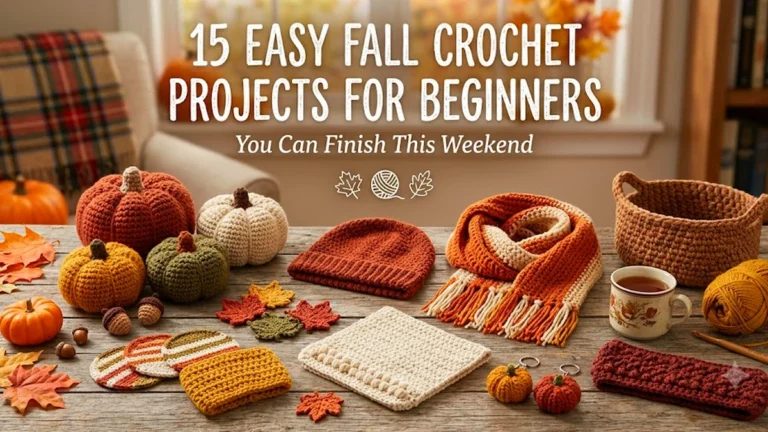
15 Easy Fall Crochet Projects for Beginners You Can Finish This Weekend
From ten-minute leaves to a lap blanket — small, satisfying makes for the season, with honest time and yarn estimates
There’s a specific kind of disappointment that comes from starting a crochet blanket in September and still working on it in March. Most of us have done it once. The yarn was beautiful, the pattern looked simple, and then row forty happened.
This list is the opposite of that. Every one of these fall crochet projects for beginners can be finished in a single sitting or a single weekend. Nothing needs more than basic stitches. Nothing needs a full bag of yarn. And every single one gives you something you’ll actually use before the season ends.
They’re sorted by how long they take, starting with the ones you could finish before dinner. Pick one, make it, and see how much better a finished small thing feels than an unfinished big one.
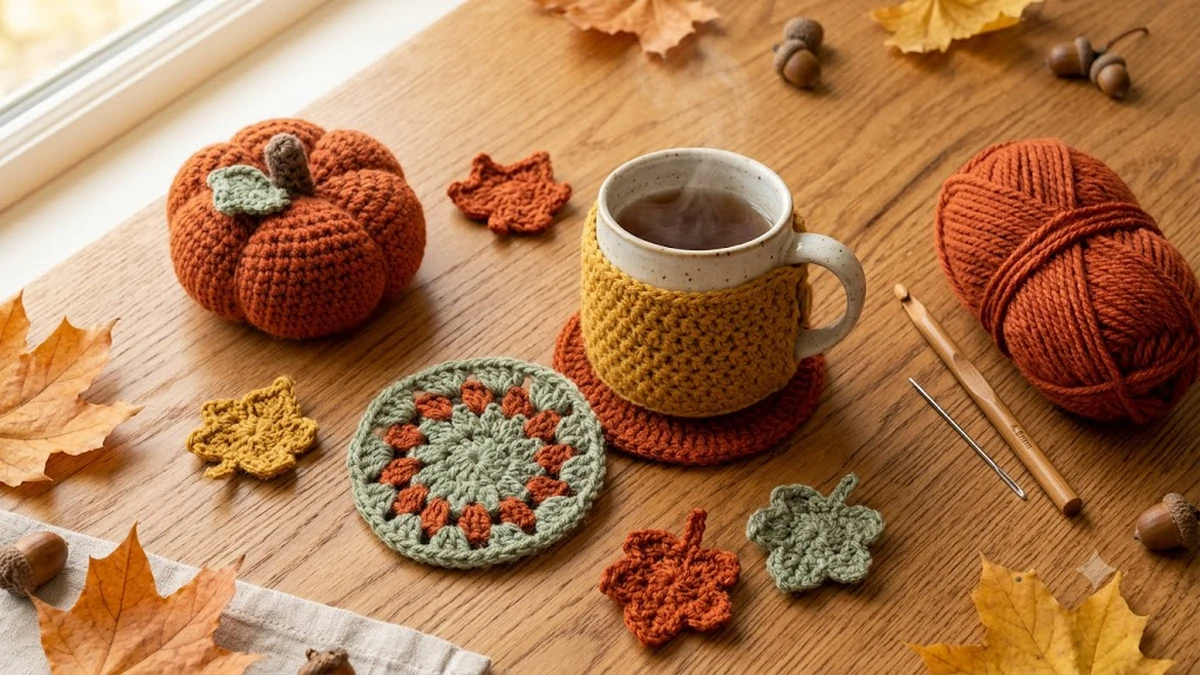
Everything on this list is small enough to finish — and useful enough that you’ll actually keep it out.
📋 What’s in this guide
How to Pick Your First Fall Project
There’s one question that matters more than skill level: how long can you sit still?
Be honest about it. If your realistic crochet window is twenty minutes before bed, a scarf is not a beginner project — it’s a commitment you’ll resent by November. But five leaves over five evenings feels effortless, and at the end you have a garland.
The second question is whether you’ll actually use the thing. Coasters get used. Mug cozies get used. A sixth decorative pumpkin usually ends up in a drawer.
Finishing three small projects teaches you more than abandoning one large one. Every finished piece is a complete lesson in tension, counting, and edges.
If you’ve never held a hook, work through our beginner’s guide first. An hour there will save you three hours of confusion later.
The Right Yarn for Autumn Makes
Fall projects have a specific requirement that summer ones don’t: they need to look warm. That’s mostly about colour, but fibre matters too.
| Fibre | Best for | Watch out for |
|---|---|---|
| Acrylic | Everything. Cheap, washable, huge colour range | Can look flat in photos; won’t hold blocking well |
| Cotton | Coasters, baskets, market bags | No stretch, and heavy in large pieces |
| Wool blend | Scarves, cowls, ear warmers | Costs more; check if it’s machine washable |
| Chunky / super bulky | Fast blankets and scarves | Eats yarn fast; mistakes are very visible |
Pick three colours and one neutral, then stop. Burnt orange, mustard, and sage with a cream neutral works for almost everything on this list. Using every autumn shade at once is the fastest way to make handmade look homemade in the wrong way.
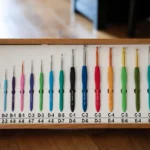
Not sure which hook goes with which yarn? Our crochet hook size chart covers every weight.
Under an Hour — 5 Quick Wins
Start here. Every project in this section is finished in one sitting, which is exactly what a beginner needs.
Crochet Leaves
The single best first fall project. A leaf is small enough to finish in one go, forgiving enough that a wobbly one still looks natural, and useful enough that fifteen of them become a garland for your mantel.
Make three in different colours before you decide whether you like them. Full instructions for maple, oak, and birch are in our fall leaf garland guide.
Tip: Leaves curl if you work the points too tightly. Steam them flat when you’re done and they’ll stay that way.
Cotton Coasters
A coaster is a flat circle or square, which means it teaches you the one skill that trips up every beginner: keeping work flat. If your coaster turns into a bowl, you’ve learned about increases. If it ruffles, you’ve learned about too many.
Use cotton, not acrylic. Cotton absorbs, acrylic just moves the water around.
Tip: Make a set of four in graduating shades of the same colour. It looks deliberate and costs nothing extra.
Mug Cozy
A rectangle with a button. That’s the whole thing — and yet it’s the project people ask about most when they see your coffee.
Measure your mug’s circumference and subtract half an inch so it fits snugly. Textured stitches work beautifully here because the cozy is small enough that a fancy stitch won’t wear you out.
Tip: Sew the button on before you weave in the ends. It’s easier to adjust the fit while the tail is still long.
Corner Bookmark
Autumn is reading season, and a triangle bookmark that slips over the corner of a page is one of the most-used small things you can make.
It’s worked as a small triangle, folded, and seamed along two edges. Add a tiny crochet leaf to the point and it becomes a gift rather than a bookmark.
Tip: Make it in cotton. Acrylic bookmarks slide out of books.
Scrunchies
Worked directly around a plain hair elastic, so there’s no sewing and no shaping. You simply crochet over the elastic until it’s covered.
These are the project people buy at markets more often than almost anything else, because they’re cheap to make and instantly appealing in autumn colours.
Tip: Work more stitches than feels necessary. A scrunchie should look full and ruffled, not stretched thin.
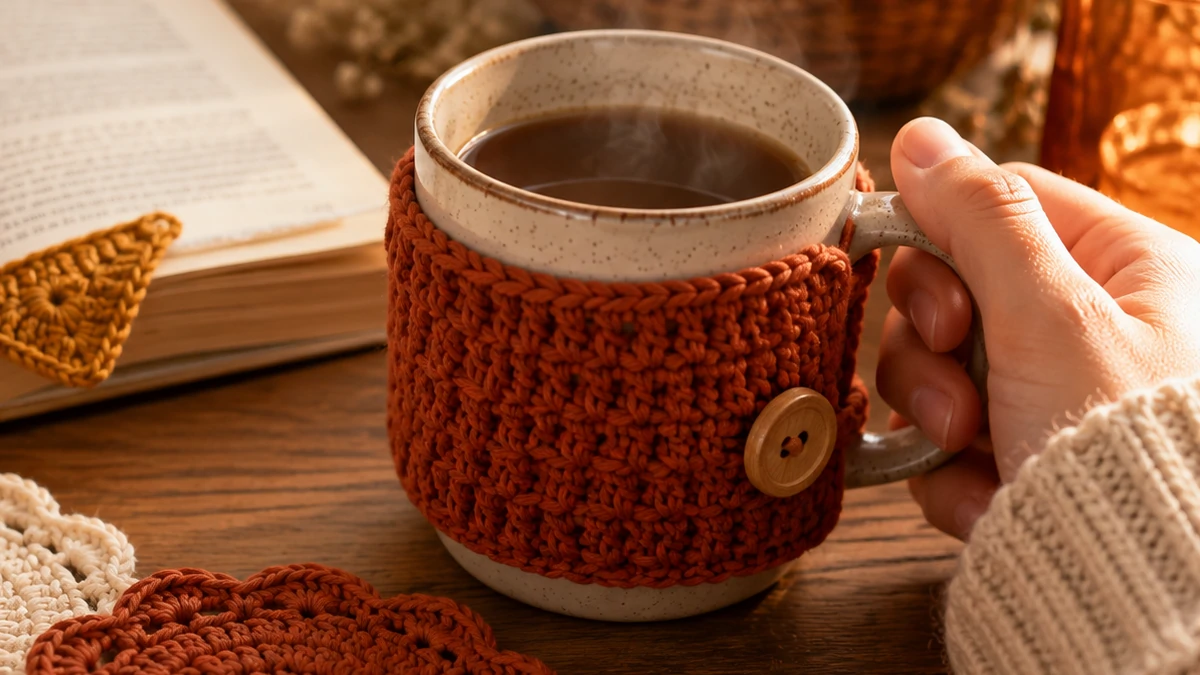
A mug cozy, a set of coasters and a corner bookmark — under an hour each, and all three get used daily.
An Afternoon — 5 Weekend Projects
Two to five hours each. Still no complicated shaping, but you’ll end up with something substantial.
Ear Warmer Headband
A long rectangle, seamed into a loop, with a little gathering in the middle. It fits everyone, works in any yarn, and takes a fraction of the time a hat does.
This is the project to make if you want something wearable but aren’t ready to think about fitting a head.
Tip: Work it in ribbing — front post and back post stitches — so it stretches. A non-stretchy ear warmer slides off.
Small Pumpkins
The defining autumn make. A pumpkin is worked in the round as a simple ball, stuffed, then pulled into segments with yarn wrapped around the outside.
Make three in different sizes rather than three the same. A cluster of mismatched pumpkins looks far better on a shelf than a matching set.
Tip: Pull the segment wraps tighter than you think. Loose wrapping gives you a ball with lines on it, not a pumpkin.
Storage Basket
A flat circle, then straight sides. That’s it — but the result holds your yarn, your remotes, or the pile of things that lives on your coffee table.
Use two strands of worsted held together, or one strand of chunky cotton. Thin yarn makes a floppy basket that won’t stand up.
Tip: When the base is the size you want, work one round into the back loops only. That creates a sharp fold so the sides go straight up instead of flaring.
Market Bag
Mesh stitch means big holes, which means it works up fast and stretches to fit whatever you put in it. Perfect for farmers market season.
Cotton only. Acrylic stretches under weight and never recovers, so an acrylic bag ends up hanging to your knees after two shops.
Tip: Double the yarn on the handles. They carry all the weight and are the first thing to break.
Simple Cowl
All the warmth of a scarf with a third of the work, and no ends dangling in your coffee. Work a rectangle, seam the short edges, done.
Aim for about 60 cm around for a snug single loop, or 120 cm if you want to wrap it twice.
Tip: Put a half twist in before you seam it. It sits much better on the shoulders that way.
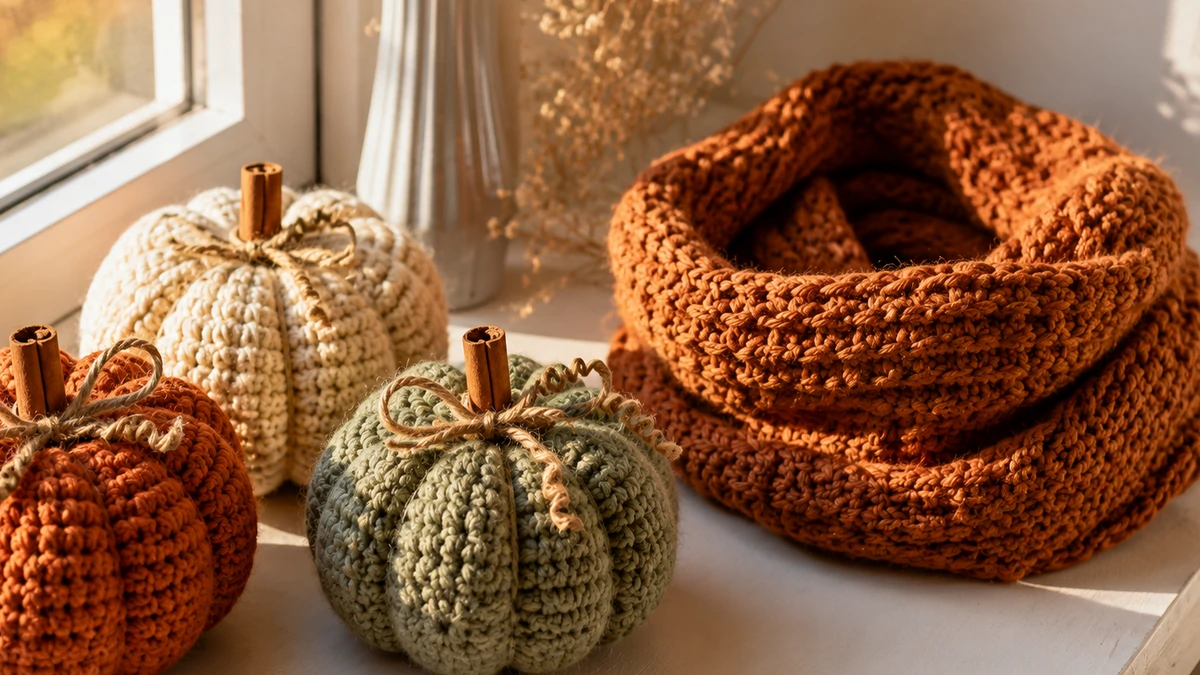
Three pumpkins in different sizes always look better than three the same. Make them mismatched on purpose.
Bigger, but Still Beginner-Safe — 5 Projects
These take more hours, but not more skill. Every one is built from repeating a single simple thing.
Granny Square Blanket
Don’t let the hours scare you. A granny square blanket isn’t one big project — it’s forty small ones, and each square takes about fifteen minutes.
You can carry squares in your bag, make them on a bus, and stop whenever you like. The only real work is joining at the end.
Tip: Make every square the same number of rounds, and check your first three against each other. Squares that drift in size are painful to join.
Chunky Scarf
With super bulky yarn and a large hook, a scarf stops being a marathon. You can genuinely finish one across two evenings.
Keep the stitch simple. Chunky yarn hides detail anyway, so half double crochet all the way through looks better than anything fancy.
Tip: 150 cm long and 20 cm wide is a good adult scarf. Longer looks dramatic; wider gets bulky under a coat.
Slippers
The most immediately rewarding project on this list, because cold floors arrive the same week you finish them.
Most beginner slippers are a flat oval sole with sides worked up from it — no complicated shaping, just increases and then straight rounds.
Tip: Try them on as you go. Crochet slippers stretch with wear, so make them slightly snug rather than roomy.
Pillow Cover
Two squares, seamed on three sides, with a cushion pad inside. It’s the fastest way to change how an entire room feels for autumn.
Measure your existing pillow and make the cover about 2 cm smaller each way. Crochet stretches, and a loose cover looks sad.
Tip: Leave the fourth side open and add buttons instead of sewing it shut. Then you can wash it.
Lap Blanket
A full blanket is a big ask for a first autumn. A lap blanket — roughly 90 by 120 cm — is a third of the work and covers exactly what you need covered on the sofa.
Pick one repeating stitch and stay with it. This is a project about rhythm, not variety.
Tip: Buy all your yarn at once and check the dye lot numbers match. Running out halfway is the most common blanket disaster.
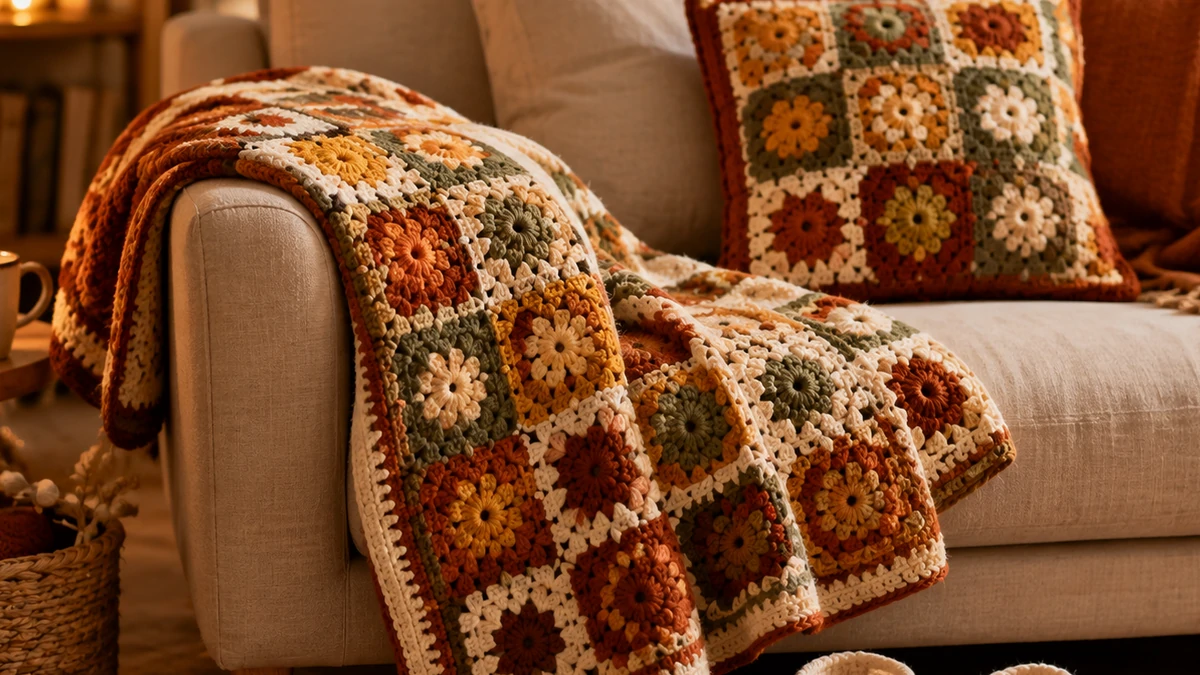
Bigger doesn’t mean harder. A granny square blanket is forty small projects, not one large one.
What Order to Make Them In
If you’re genuinely new, this sequence builds every skill you need without you noticing you’re learning.
| Week | Make | What it teaches |
|---|---|---|
| 1 | Five leaves | Chain, basic stitches, stitch height |
| 2 | Four coasters | Working in the round, keeping flat |
| 3 | Mug cozy + bookmark | Rows, turning, seaming, edges |
| 4 | Storage basket | Shaping, back loop folds, consistency |
| 5–6 | Cowl or ear warmer | Tension over long rows, gauge |
| 7+ | Granny squares | Joining, colour, finishing |
After seven weeks you’d have a garland, a set of coasters, a cozy, a bookmark, a basket, and something wearable — plus the confidence to start a blanket you’ll actually finish.
Mistakes That Ruin Autumn Projects
Starting too big. The blanket in September that becomes guilt by December. Start with leaves. You can always scale up; it’s much harder to scale down once you’ve committed.
Ignoring curling. Coasters that turn into bowls and scarves that roll into tubes have specific causes, and all of them are fixable. If it’s happening to you, our guide on why crochet curls covers all six reasons.
Skipping the swatch. Ten stitches, ten rows, five minutes. It tells you whether your hook is right before you commit forty hours to finding out it wasn’t.
Never blocking. The step most beginners skip, and the one that makes handmade look professional. Wet the piece, pin it flat, let it dry. That’s the whole technique.
Buying yarn without a plan. Everyone has the bag of single skeins bought because they were pretty. Decide the project first, then buy for it.
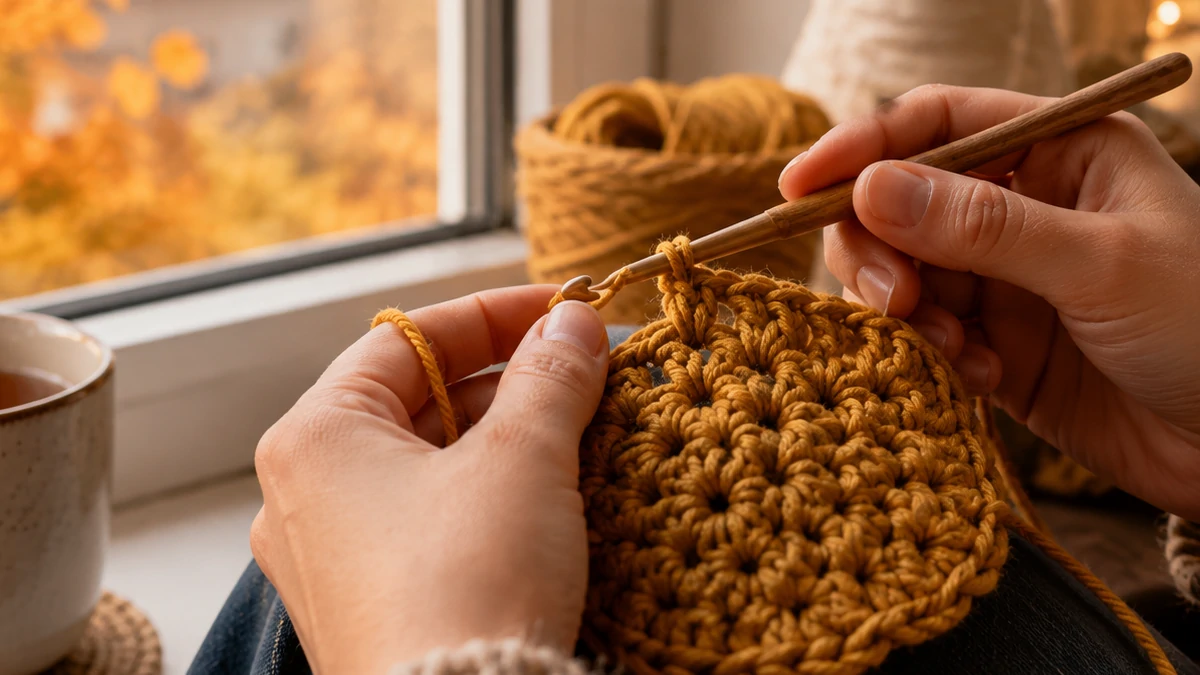
Twenty minutes an evening is enough. Small projects are built for exactly that.
Frequently Asked Questions
What is the easiest fall crochet project for a complete beginner?
A crochet leaf. It takes ten minutes, uses about ten yards of yarn, and needs only chain, single crochet, and double crochet. Because real leaves aren’t identical, small mistakes look natural rather than wrong — which makes it much less discouraging than a first scarf.
How much yarn do I need for fall crochet projects?
Small decorations need 10 to 50 yards each, so scraps are usually enough. Wearables like cowls and ear warmers need 70 to 250 yards, roughly one to two standard skeins. A lap blanket needs around 700 yards, and a full blanket over 1000.
What yarn colours look best for autumn crochet?
Burnt orange, rust, mustard, olive, and warm brown are the core autumn palette. Pick three of them plus one neutral like cream or oatmeal, and use that combination across everything you make. Limiting the palette is what makes a collection of handmade items look intentional.
How long does it take to crochet a scarf as a beginner?
With super bulky yarn and a large hook, six to eight hours — about two evenings. With standard worsted weight yarn, expect fifteen to twenty hours. If it’s your first wearable project, chunky yarn is the difference between finishing and giving up.
Can I sell things I make from beginner crochet patterns?
It depends entirely on the designer. Many free patterns allow selling finished items if you credit the designer, some don’t allow it at all, and reselling the written pattern itself is never permitted. Always check the pattern page before listing anything for sale.
Is crochet or knitting easier to learn for fall projects?
Most people find crochet easier to start, because you only ever have one live loop on the hook. Drop it and nothing unravels. In knitting every stitch on the needle is live at once, which makes early mistakes harder to recover from.
Final Thoughts
The best autumn project is the one that’s finished and sitting on your table, not the ambitious one folded in a bag. Every item on this list was chosen because it ends.
Start with the leaves tonight. They take ten minutes, they use yarn you already have, and by the weekend you’ll have something hanging on your mantel that you made yourself. Everything after that gets easier.
Start With the Leaves 🍁
Three free leaf patterns and mini acorns — the fastest way into autumn crochet.
Get the Free Patterns →