
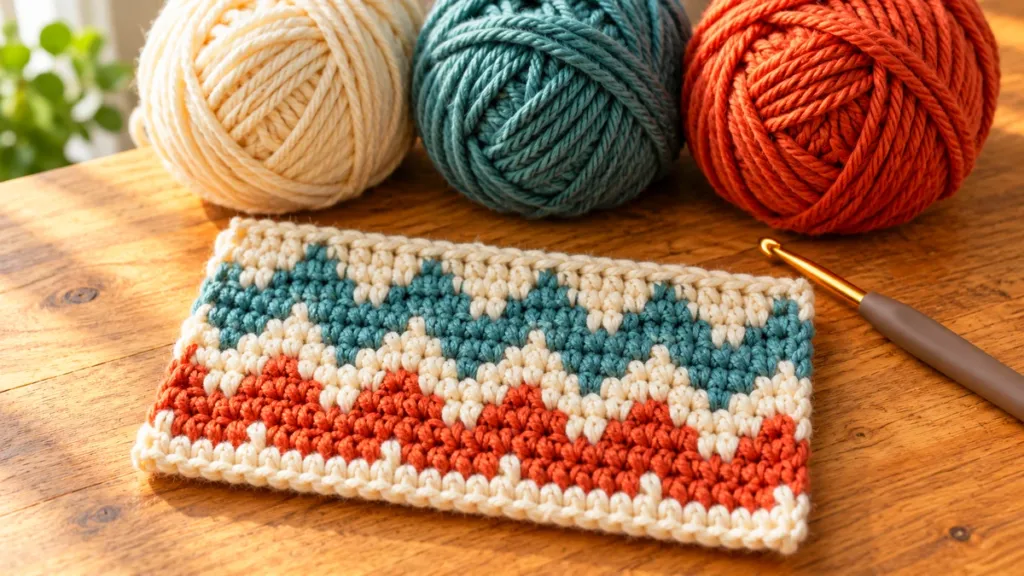
Change colors cleanly without turning your yarn into a tangled mess
Learn one simple color-change rule, then choose the right method for stripes, small motifs, or large blocks of color.
Learning how to crochet with multiple colors starts with one simple rule: change to the new yarn while you finish the last stitch of the old color. Once that movement makes sense, you can use two, three, or more colors without guessing where each change should happen.
If you are learning how to crochet with multiple colors for the first time, the harder part is usually deciding what to do with the yarn you are not using. Sometimes you carry it inside the stitches. Sometimes it floats across the back. For large blocks, it is usually cleaner to give each color section its own small ball or bobbin.
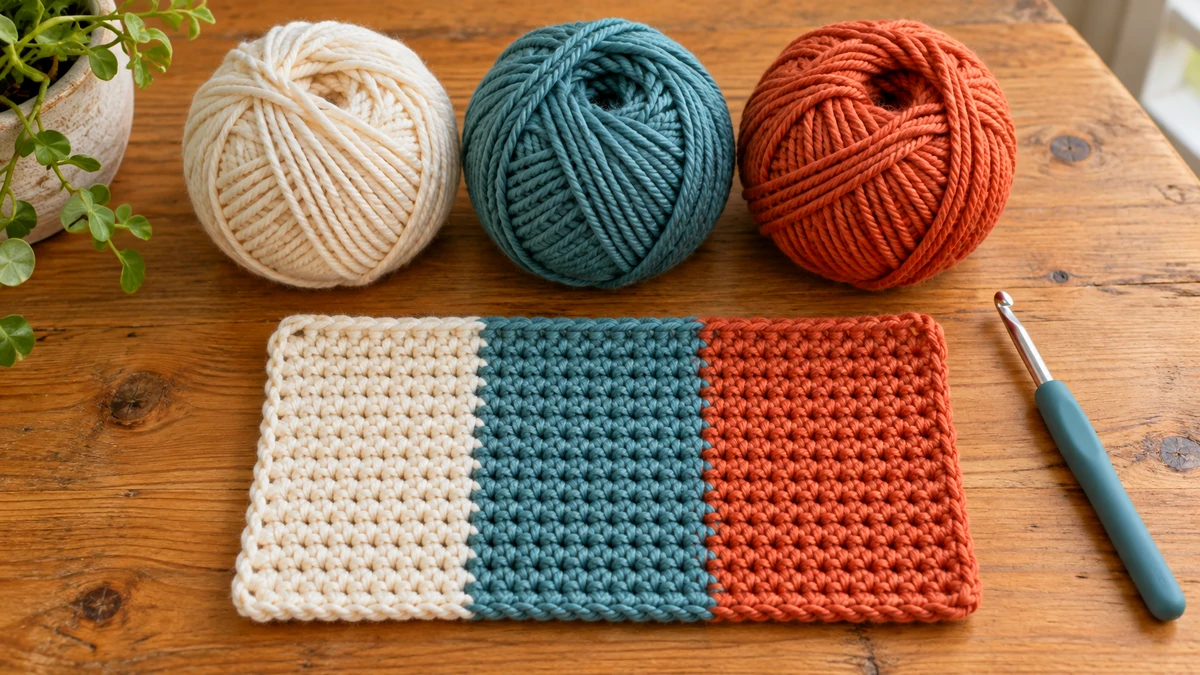
1. How to Crochet With Multiple Colors: The One Rule to Learn First
You do not wait until the next stitch to add the new yarn. Instead, use the new color for the final yarn over of the stitch before the color change.
The basic color-change rule
Work the last stitch with Color A until only the final yarn over remains. Drop Color A. Yarn over with Color B and use Color B to finish that stitch. The loop now on your hook is Color B, so the next stitch begins in the correct color.
This rule works for single crochet, half double crochet, double crochet, and many other basic stitches. The exact moment changes slightly because each stitch has a different number of loops, but the new yarn still completes the final step.
If you will use Color A again soon, leave it attached. Carry it, float it, or leave it waiting at the edge of its color block. Cut only when you know that color is finished for a while.
2. Which Multiple-Color Crochet Method Should You Use?
When you learn how to crochet with multiple colors, you quickly find that one yarn-management method does not fit every project. The right choice depends on where the colors appear and how often they change.
| Method | Best for | What happens to unused yarn? |
|---|---|---|
| Stripes | Changing the whole row or round to a new color | Cut it or carry it a short distance up the edge. |
| Tapestry crochet | Small motifs and frequent changes within one row | Unused yarn is crocheted over and hidden inside the stitches. |
| Intarsia | Large separate blocks of color | Each block uses its own yarn ball or bobbin. |
| Floats | Short repeated color changes when the wrong side is hidden | Unused yarn travels across the back until needed again. |
If the same color returns after only a few stitches, carrying it can make sense. If it returns after a large section, use a separate bobbin instead of dragging that strand across the whole row.
3. What You Need to Learn How to Crochet With Multiple Colors
Use #4 Medium / worsted yarn in cream, teal, and rust or another high-contrast combination.
A US H-8 hook is a comfortable starting point for many smooth worsted yarns.
You need them only when a color is truly finished.
Use it to weave in starting and finishing tails after practice.
Small yarn bobbins make large color blocks easier to manage.
Choose colors you can easily tell apart while learning the technique.
If you are still learning the basic stitches, start with the CrochetEco beginner crochet guide .
You can also compare hook sizes in the CrochetEco crochet hook size chart .
For standard US crochet abbreviations, see the Craft Yarn Council crochet abbreviation list .
ch = chain · sc = single crochet · hdc = half double crochet · dc = double crochet · st / sts = stitch / stitches · yo = yarn over · RS = right side · WS = wrong side
4. How to Change Colors in Single Crochet
When learning how to crochet with multiple colors, single crochet is the easiest stitch to practice first because the color change happens while two loops remain on the hook.
Start the last stitch in Color A
Insert the hook into the next stitch. Yarn over with Color A and pull up a loop. You now have two loops of Color A on your hook.
Drop Color A
Do not yarn over with Color A again. Leave it attached and let it rest where you will need it later.
Pick up Color B
Place Color B over the hook. Leave a yarn tail long enough to weave in securely later.
Finish the stitch with Color B
Pull Color B through both loops on the hook. One loop of Color B remains. Work the next stitch normally with Color B.
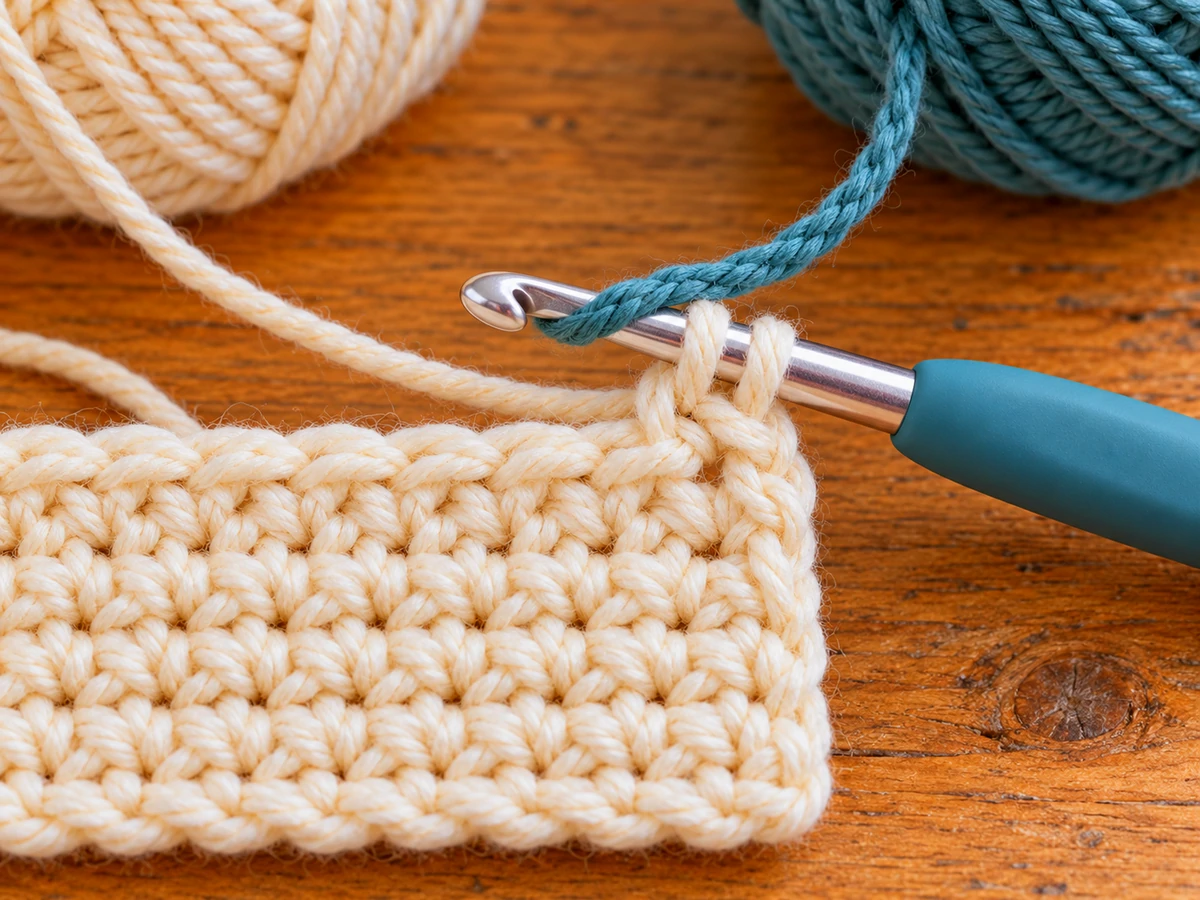
Do not complete the old stitch fully and then attach the new color. That places the new color one step too late and can make the transition look less clean.
5. Changing Color in Half Double and Double Crochet
The same rule works with taller stitches. Finish the final pull-through with the new color.
| Stitch | When to switch colors |
|---|---|
| Single crochet | When 2 loops remain on the hook, yarn over with the new color and pull through both. |
| Half double crochet | After pulling up a loop, 3 loops remain. Use the new color for the final yarn over and pull through all 3 loops. |
| Double crochet | Work until 2 loops remain after the first pull-through. Use the new color for the final yarn over and pull through those last 2 loops. |
The loop left on your hook is always the color that starts the next stitch.
6. How to Crochet Stripes With Multiple Colors
Stripes are the easiest form of colorwork because the color usually changes at the end of a row instead of several times across it.
This is also one of the easiest ways to practice how to crochet with multiple colors. Work the final stitch of the row until the last yarn over. Finish that stitch with the new color, turn, and start the next row with the new yarn already on your hook.
If a color will be used again soon at the same edge, leave it attached and carry it loosely up the side. A border can hide that strand later. If the color will return on the opposite edge or many rows later, cutting and rejoining may be cleaner.
Do not pull the carried strand tight. A tight strand can shorten the edge and make the fabric pucker.
7. Tapestry Crochet: Carry Unused Colors Inside the Stitches
If you are learning how to crochet with multiple colors for small pictures or repeated motifs, tapestry crochet is one of the most useful methods to understand.
Hold the unused color along the top of the previous row and crochet over it with your active yarn. Insert the hook into the next stitch and under the unused strand, then finish the stitch normally.
The new stitches wrap around that unused strand and carry it across the work until it is needed again.
A dark strand may be visible inside very light stitches. Keep the carried yarn relaxed and centered inside the stitches. If you do not need that color for a long section, dropping it or using intarsia may give a cleaner result.
For a different way to combine a chart with crochet texture, see the CrochetEco crochet tapestry bobble stitch tutorial .
8. Intarsia Crochet: Use Separate Yarn for Large Color Blocks
If your design has one large teal section beside one large cream section, carrying both colors across every stitch adds unnecessary bulk.
Intarsia avoids that problem. Each color block gets its own ball or bobbin. When you reach the border between two colors, finish the last stitch with the next color, then leave the old yarn waiting at that boundary.
When you return on the next row, the yarn is already waiting where that block begins.
Before working away with the new yarn, make sure the two strands meet snugly at the color boundary. Gently cross the strands as you change colors, but do not tie a knot or pull hard enough to distort the fabric.
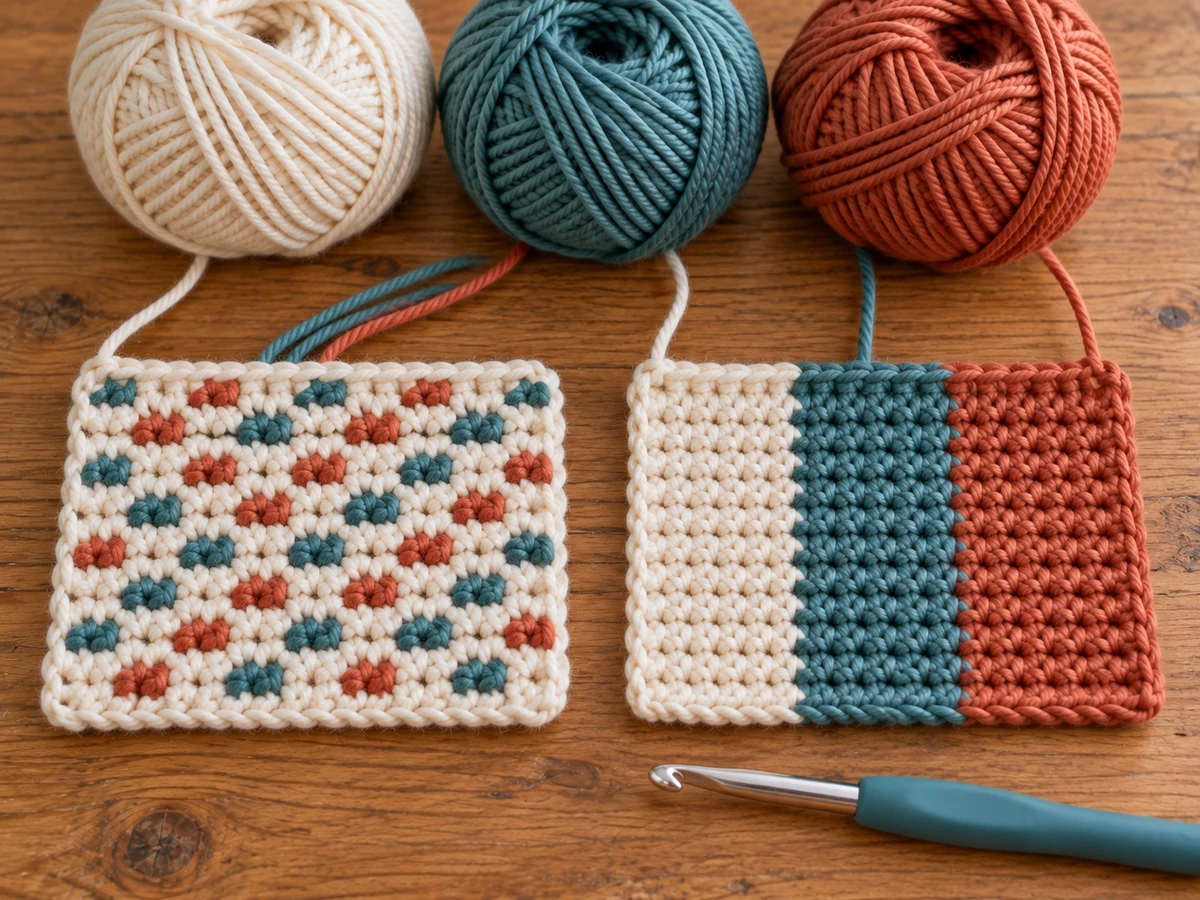
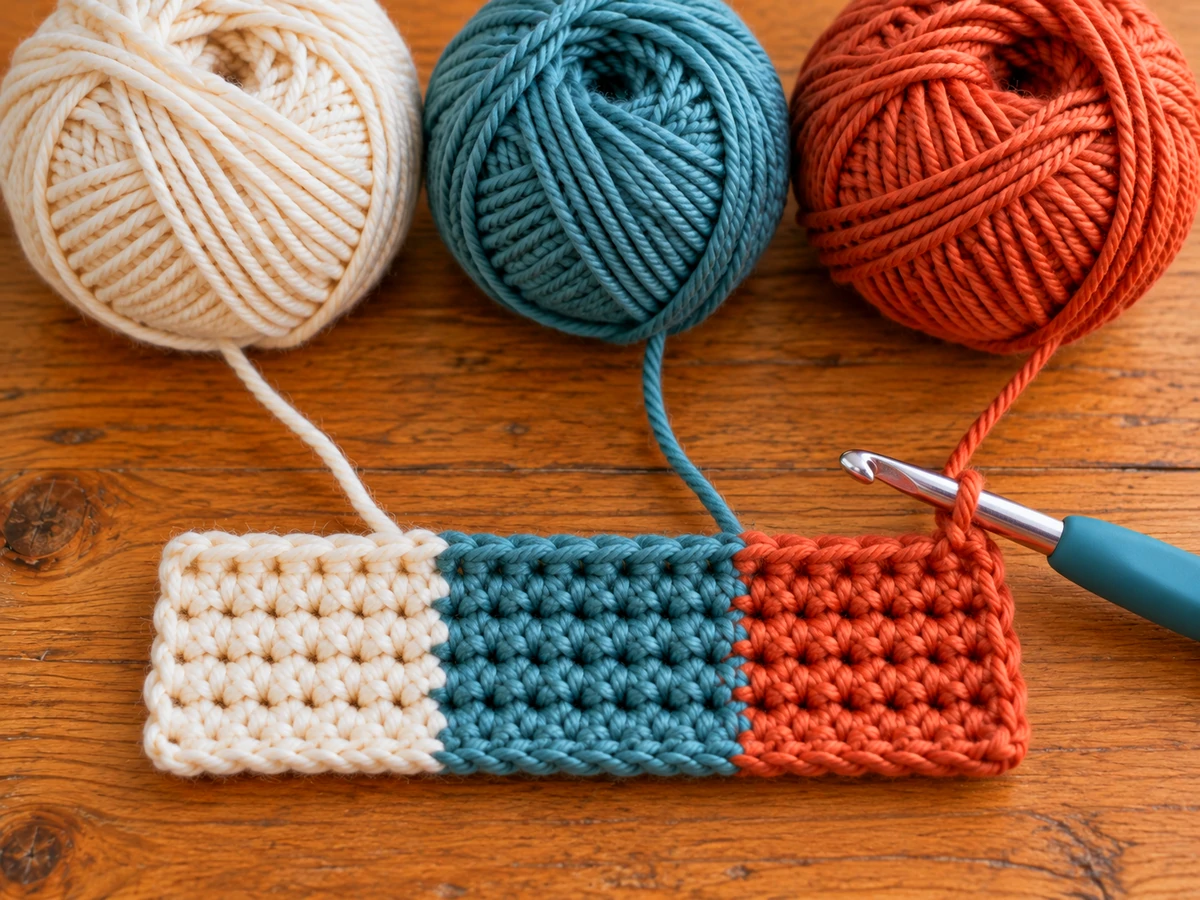
9. Easy 3-Color Practice Swatch
This practice piece shows how to crochet with multiple colors in three vertical blocks using an intarsia-style setup.
Use smooth worsted yarn in:
Color A = cream · Color B = teal · Color C = rust
The swatch stays at exactly 18 stitches: 6 stitches in each color block.
Foundation
With Color A, ch 19.
Row 1 — A → B → C
Sc in the 2nd chain from the hook and in the next 4 chains. (5 normal A stitches)
Begin the next sc with Color A. When 2 loops remain, finish the stitch with Color B. This is the 6th stitch in the Color A block.
Sc in the next 5 chains with Color B.
Begin the next sc with Color B and finish the final yarn over with Color C. This completes the 6th stitch in the Color B block.
Sc in the final 6 chains with Color C. (18 sts total) Ch 1 and turn.
Row 2 — C → B → A
Sc in the first 5 stitches with Color C. Begin the 6th sc with C and finish it with Color B.
Sc in the next 5 stitches with B. Begin the 6th B stitch and finish it with Color A.
Sc in the final 6 stitches with Color A. (18 sts total) Ch 1 and turn.
Rows 3–4
Repeat Row 1: 6 A, 6 B, 6 C. (18)
Repeat Row 2: 6 C, 6 B, 6 A. (18)
Every row contains 6 stitches in each of three color blocks: 6 + 6 + 6 = 18 stitches. Changing yarn does not add or remove a stitch.
10. How to Crochet With Multiple Colors Without Tangling the Yarn
Three yarn balls can turn into a knot faster than the crochet itself. Most tangles happen because the balls cross places every time the work turns.
Place the yarn balls in the same left-to-right order as the color blocks in your work.
For small color areas, wind only the yarn you need onto a bobbin instead of moving a full skein.
If the strands begin twisting together, turn the project in the opposite direction on the next row to help undo the twist.
Carrying three or four colors through a section that needs only one can make the fabric thick and show extra colors through the stitches.
11. How to Crochet With Multiple Colors in the Round
When you need how to crochet with multiple colors instructions for a round project, the basic color-change rule is still the same: begin the last stitch in the old color and complete the final yarn over with the new one.
If you make horizontal stripes in continuous rounds, you may see a small step where one round flows into the next. Spiral rounds do not have a perfectly level row boundary.
Joined rounds or a pattern-specific technique can reduce that visible jog, but the best method depends on the project. Do not add complicated “invisible” steps unless the pattern actually needs them.
12. Common Multiple-Color Crochet Problems
Most problems that appear while learning how to crochet with multiple colors come from changing yarn one step too late, carrying it too tightly, or using the wrong method for the size of the color section.
My new color starts one stitch too late.
Change yarn during the final yarn over of the stitch before the new color begins. Do not wait until the next stitch is already started.
The fabric puckers where I carry yarn.
The unused yarn is too tight. Lay it along the work without stretching it, then crochet around it with normal tension.
The carried color shows through my stitches.
Keep the carried strand centered inside the stitches and do not pull it toward the front. Strong contrast, especially dark yarn inside a light color, can still show slightly. For a large solid section, intarsia may look cleaner.
I have a hole between two intarsia colors.
Bring the two strands together at the boundary and gently cross them when you switch. Keep the join snug but not tight enough to pull the fabric inward.
My yarn balls keep twisting together.
Stop every few rows and put the balls back in order. Bobbins help with smaller color areas. Also avoid spinning the entire project in the same direction every time you turn.
13. How to Crochet With Multiple Colors FAQ
Do I need to cut the yarn every time I change colors?
No. If you will use that color again soon, leave it attached. You can carry it inside the stitches, float it along the back, carry it up an edge, or leave it waiting on a bobbin.
How many colors can I crochet with at once?
There is no fixed number, but more active yarns mean more bulk and more tangles. Beginners usually learn faster with two colors, then add a third after the color-change movement feels natural.
Should I use tapestry crochet or intarsia?
Use tapestry crochet when colors switch frequently over short distances. Use intarsia when the design contains larger separate blocks of color.
Can I change colors in double crochet?
Yes. Work the double crochet until only two loops remain on the hook. Yarn over with the new color and pull it through those final two loops.
What is the easiest way to learn how to crochet with multiple colors?
Start with two colors and single crochet. Practice changing yarn on the final yarn over. Then make the three-color swatch above before moving to a chart or a larger colorwork design.
Final Thoughts on How to Crochet With Multiple Colors
Once you understand how to crochet with multiple colors, most colorwork comes down to two decisions: when to switch yarn and what to do with the colors you are not using.
Change color during the final yarn over of the previous stitch. Then use stripes for full rows, tapestry crochet for frequent small changes, or intarsia for larger blocks. If you are unsure which method fits your project, start with the three-color swatch above.
When you are comfortable with basic color changes, the crochet tapestry bobble stitch tutorial is a good next step for combining a chart with textured crochet.
Learn Another Crochet Technique
Clear tutorials, practical stitch help, and step-by-step crochet lessons.
Browse Crochet Tutorials →





Reader discussion
Reader Comments
Tried this pattern? Share what worked, ask a question, or help another crocheter.
Your turn
Comments are moderated to keep the discussion useful and family-friendly. Please do not post personal information.