
Where to Find a Crochet Class Near You
The places worth checking, the questions to ask before you pay, and how to arrive at your first class a step ahead.
Searching “crochet classes near me” usually gives you a map full of pins and not much else. Some of those places haven’t run a class in years, and some only teach knitting. This guide explains where beginner crochet classes are actually held, how to check them quickly, and what separates a class you’ll enjoy from one that leaves you more confused than when you walked in.
- Local yarn shops: beginner series, private lessons and drop-in help.
- Public libraries: often free fiber-arts clubs and learn-to-crochet sessions.
- Community and adult-education programs: parks and recreation, community centers and noncredit college courses.
- Crochet guild chapters: the Crochet Guild of America lists local and online chapters.
- Craft store events: class schedules vary from store to store.
- Local crochet groups: meetups and social-media groups where experienced crocheters help beginners.
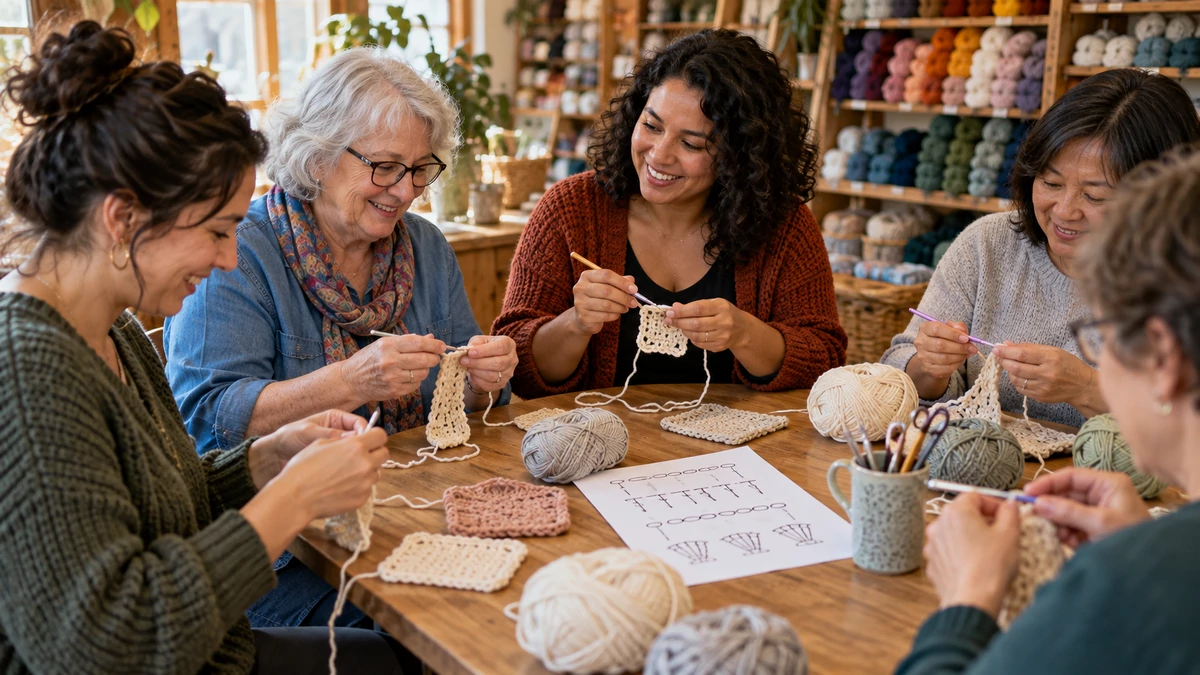
Where crochet classes are held
1. Local yarn shops
Independent yarn shops are still the most common place to find a proper beginner crochet class. Many run a short series, often two to four sessions, where you learn the basic stitches and finish a small project like a dishcloth or a simple scarf. Some also offer one-on-one lessons, which help a lot if you’ve tried videos and keep getting stuck on the same thing.
Ask about “help hours” or open stitching nights too. Those are informal sessions where you bring your project and someone looks over your shoulder. They’re great once you know the basics.
Search: yarn shop near me, then check each shop’s website or call and ask, “Do you teach crochet, or only knitting?”
2. Public libraries
Many libraries host fiber-arts clubs, and some run learn-to-crochet sessions, often free. Groups at a library are usually relaxed and mixed-level, which makes them a good place to keep going after a first lesson.
Search: [your library name] events crochet, or look under “adult programs” on your library’s website.
3. Community centers and adult education
City parks and recreation departments, community centers, senior centers and community colleges (in their noncredit or continuing-education catalog) sometimes list crochet among their craft classes. These courses tend to be affordable and run on a fixed schedule, which suits people who like a set routine.
Search: [your city] parks and recreation crochet class or [community college name] continuing education crochet.
4. Crochet guild chapters
The Crochet Guild of America keeps a chapter directory you can search by state, including online-only chapters. Guild members aren’t a classroom, but many chapters hold teaching meetings, and members are usually glad to help a newcomer with a stubborn stitch.
5. Craft store events
Some craft store locations host beginner workshops, but schedules differ a lot from store to store and change often. Always check that specific store’s event page, or phone them, rather than assuming.
6. Local crochet groups
Local meetup groups, neighborhood social-media groups and charity crochet circles (groups that make blankets or hats to donate) are some of the friendliest places to learn. They aren’t formal classes, but you’ll pick up tips you won’t find in any pattern.
Search: crochet group [your city] or crochet meetup [your town].
Search phrases that actually work
“Crochet classes near me” is a good start, but more specific searches find smaller places that don’t show up on the first map results:
- beginner crochet class [city]
- learn to crochet [library or county name]
- crochet lessons for beginners [neighborhood]
- yarn store classes [city]
- crochet circle or crochet club plus your town
When a listing looks promising, check the date of the most recent class on the page. If the latest one is from a couple of years ago, call before you plan around it.
In-person vs online classes
| In-person class | Online class or video | |
|---|---|---|
| Best for | Absolute beginners who keep getting stuck | Busy schedules and learning at your own pace |
| Feedback | A teacher can fix your grip and tension on the spot | Usually none, unless it’s a live class |
| Cost | Varies. Library groups are often free and shop series are paid. | Many free videos, plus paid courses |
| Community | You meet people who crochet near you | Online groups and comments |
| Watch out for | Classes that are really knitting-focused | Mixed US and UK terms in different videos |
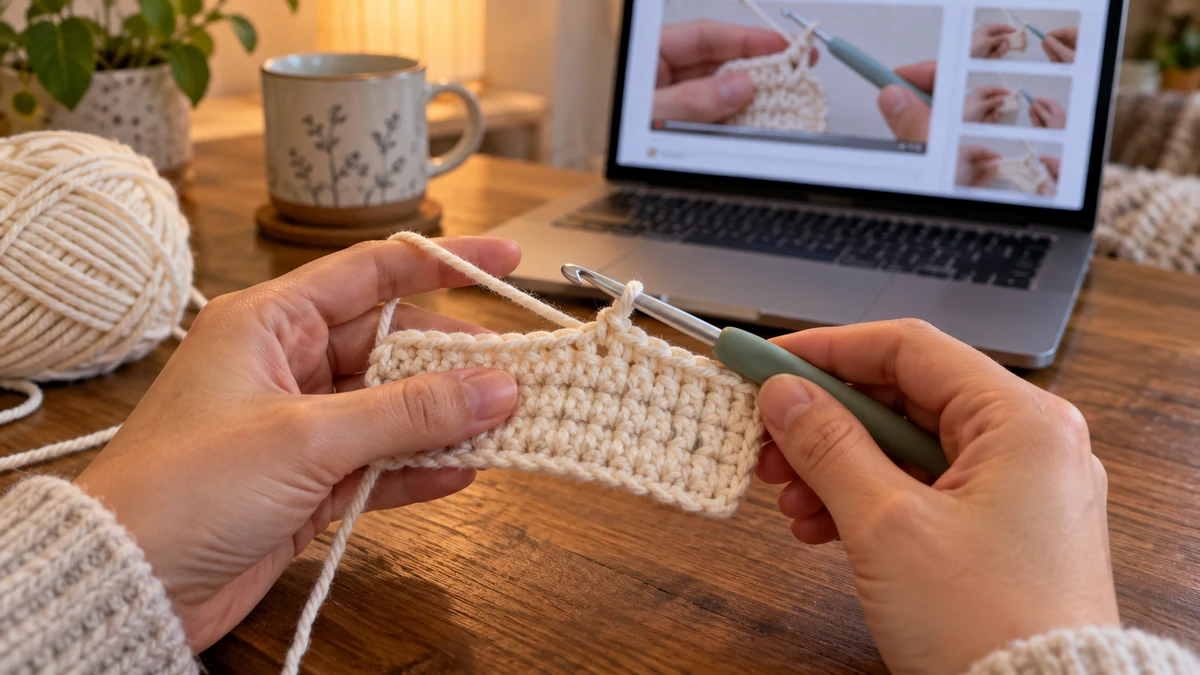
Many people do both: one or two in-person sessions to get the hand position right, then free tutorials to keep practicing at home.
What to ask before you sign up
- Is this class crochet (not knitting), and is it for complete beginners?
- How many students are in a class? Smaller groups get more one-on-one help.
- How many sessions, and what will I have made by the end?
- Are the hook and yarn included, or do I bring my own? Which size?
- Does the teacher use US or UK crochet terms?
- I’m left-handed. Can the teacher show me the stitches mirrored?
- What happens if I miss a session? Is there a make-up or refund policy?
What a good beginner class covers
By the end of a beginner series you should be able to:
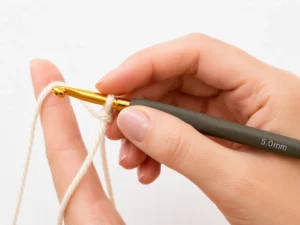
- Hold the hook and yarn comfortably and make a slip knot.
- Make a foundation chain and count it correctly.
- Work single crochet and double crochet in rows, and turn without losing stitches.
- Recognize the top loops of a stitch so your edges stay straight.
- Read a simple written pattern and its abbreviations.
- Fasten off and weave in ends.
A good first project is small and flat: a dishcloth, a coaster or a short scarf. If a “beginner” class starts with amigurumi or garments on day one, that’s a lot to take on. It’s doable, but expect some frustration.
What to bring
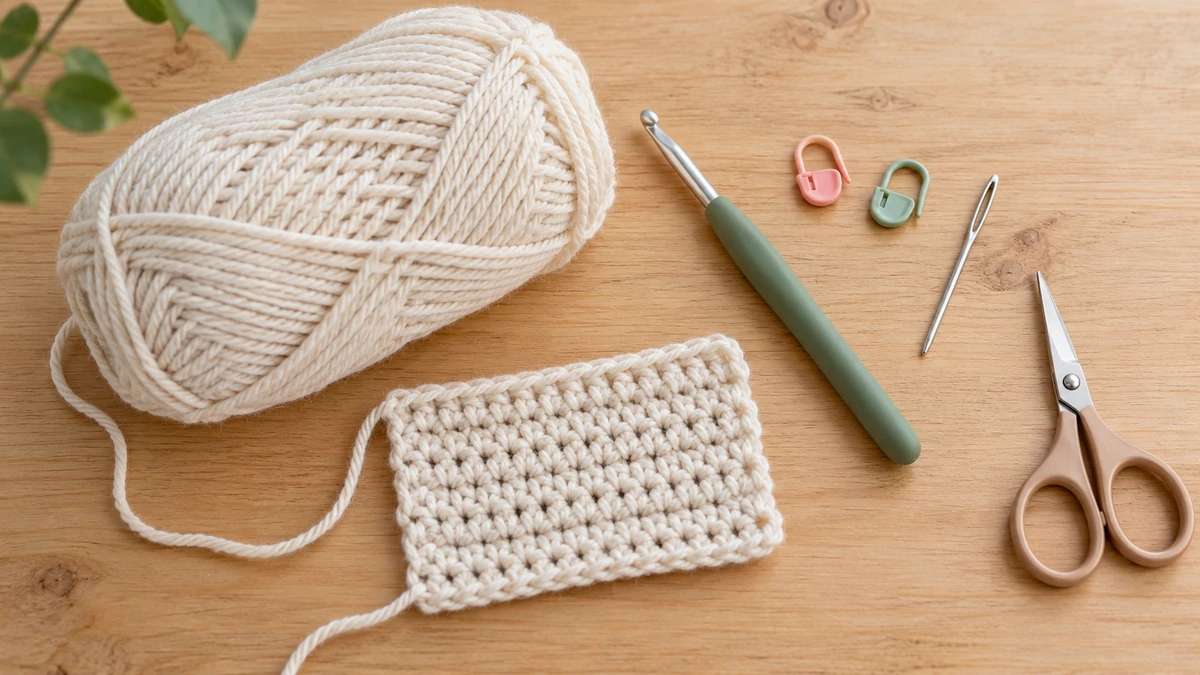
- A 5 mm (H-8) hook, unless the class supplies one. It’s the easiest size for most worsted yarn. Our crochet hook size chart explains the numbers.
- Smooth, light-colored worsted (weight 4) yarn. Light colors make stitches easier to see, and fuzzy or dark yarn hides them.
- Small scissors, a blunt tapestry needle and a couple of stitch markers.
- Your glasses or a small clip-on light if you need them. Many classrooms are dim.
Practice before your first class
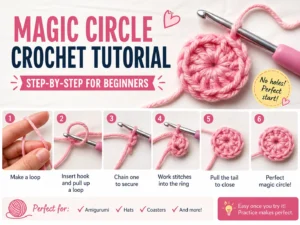
You don’t need to know anything before a beginner class, but an hour of practice helps you get much more out of it. Try making a slip knot and a chain of 20 stitches until the chains look even. Our how to crochet for beginners guide walks through this with pictures. If your class moves on to working in the round, the magic circle tutorial is a good one to read afterward.
No class near you? Do this
- Check whether your library or a guild chapter runs an online group. Many meet by video.
- Learn the first stitches from a clear written or video tutorial, one stitch per day.
- Make a small swatch and compare it with photos. Uneven edges usually come from missing the last stitch or adding one at the start of a row.
- Join an online crochet community and post a photo when something looks wrong. People are generous with beginners.
- When you’re ready, pick a simple pattern with stitch counts for every row, so you can check your work as you go.
FAQ
How do I find crochet classes near me?
Check local yarn shops first, then your public library’s events, community and adult-education programs, and the Crochet Guild of America chapter directory. Call before you go, because class schedules change often.
How much do crochet classes cost?
It depends on where you go. Library groups are often free. Yarn shops and community programs usually charge per session or per series, and some include supplies. Ask what’s included before you compare prices.
How long does it take to learn to crochet?
Most people learn the chain and single crochet in a first session of an hour or two. Getting even, relaxed tension takes a few weeks of regular practice.
Is an in-person or online class better for beginners?
In-person is easiest for complete beginners because a teacher can correct how you hold the hook and yarn. Online classes and videos are great for practice once the basics feel natural.
Can left-handed people take a regular crochet class?
Yes. Mention it when you sign up so the teacher can sit across from you or demonstrate in mirror image. Crochet works the same way with either hand.
Want to start today?
Begin with our step-by-step beginner guide, then browse the crochet tutorials for your next stitch.

Reader discussion
Reader Comments
Tried this pattern? Share what worked, ask a question, or help another crocheter.
Your turn
Comments are moderated to keep the discussion useful and family-friendly. Please do not post personal information.